Dear Player: Confessions of a Pokémon Eater

Standard

I crave candy. It’s a hunger I share with 7yr-olds and cartoon characters. Much has been written about how this primal urge, Niantic’s Pokemon GO, is either saving or dooming a generation (and its road traffic). But we’ve had ARGs and fandoms before, why is this craze proving so provocative?  A huge proportion of stories about this social phenomenon feed on gross exaggeration – either reality is melting or global communities forming, depending on the commentator. Zombie hordes are roaming our cities! An obese hemisphere is being cured! Car crashes and dead bodies are the price we are paying! And phones are bringing us all together in life-affirming adventure! MPs in Russia have even called for a ban.

1

The negative voices are predictable – in the main sensationalist misunderstandings of new media, and conservative fears about the corruption of the ‘youth’ – and the perhaps exaggerated positive defences of the game are understandable given the effective erasure of young voices in a culture that vilifies anything popular. Yet, I think there might be something more significant to find if we strip away the hyperbole, an explanation of the dystopian/utopian mania of our perception of it, and try to locate the subtle subversions and plain banality of Pokemon GO. This phenomenon, as I see it, is an opportunity to reflect on normality – to look at the common nature of crazes – and as I’ll argue, a lot of the myth-making around Pokemon GO reflects pre-existing concerns: from ableism in urban planning to fears concerning attentiveness and labour.

Video game developers and critics are actually largely cold to Pokemon GO, and why shouldn’t they be? Another year, another sales record broken, plus ca change. The ‘unique selling point’ of GO has even been done before – augmented reality has been around for years, and Niantic’s previous game, Ingress, used similar systems and even a lot of the same database.

2

‘Big whoop’ say Alex Nevarro, Nick Breckon, Jake Rodkin, Chris Romero, Rob Zacny and others; ‘it’ll be over soon, and it’s not even well designed or executed.’ But the numbers involved, and the cross-generational penetration are staggering – 75million users in a couple of weeks. It might be a weird conceit to win mass appeal – a dying 90s Japanese anime franchise – perhaps hard to accept, but more people are into it than any other mobile game. Certainly more people are into it than GTA V (65million copies sold), and with it surpassing Tindr, maybe more people are into it than… sex? Tech Crunch even reports it overtaking Facebook and Twitter in popularity. It’s big. Huge enough to influence local businesses and dog shelters, big enough to cause Japan to practically declare a pre-emptive state of emergency, and importantly large enough to be a diagnostic tool of things bigger and more concrete than gaming-unto-itself.

Pokemon GO is a blunt instrument. Its candy fed catching and upgrading loops are simple and well-trod – industry insiders are excusably cynical. Bosses have been complaining about the distraction and idleness of workers since the mid-19th-century (Jonathan Crary), it doesn’t add much of a burden to our already frayed attention or much more of a critique to the work ethic. Nothing revolutionary perhaps, perhaps it’s the critics that suffer from a lack of attentiveness. Considering that Nintendo lost 17% of its share price for repeating the fact that it didn’t make this game shows how hasty and inexpert the economy surrounding this spectacle is. Pokemon GO is in itself pretty banal, it’s where it’s ‘going’, what it’s doing, that pulls us in. Visual/documentary culture surrounding PG is revealing in stressing how it is relationships, not content, that’s driving this craze. It’s not Pokemon, it’s our relationship to the world.

3

People are understandably fascinated by the enrapturing myths and the manifestations of ‘mass-hysteria.’ Who else but Lovecraft could have written this scene of a crowd of glowing phones walking into the sea after an invisible blastoise? The often-repeated story of one PG player’s encounter with a dead body finds its opposite number in groups hilariously (hopefully) getting stuck in mud pits, but what these narratives all share is an unintentional emphasis on relational aesthetics. A magikarp is a chuckle, but a magikarp inside a smoothie-maker is a thousand likes. PG lives in the ‘real’ world. It outgrows social networks because it feeds on them, it makes the city our timeline. From the outside it may seem invisible, weird ‘ether’ to the uninitiated, but it’s magic lies in augmenting reality, not displacing it.

4

With a map showing the Blastoise, the horde wading into the sea is comical rather than creepy, but it’s precisely this asymmetry of information which makes the phenomenon into ready-made myth. What are these ghosts that cause people to stop and start in the street? What can I see that they can’t and vice versa? And what does it mean that what I miss could have a knock-on effect for me? The ‘hysteria’ is on the other foot – conservative’s calling the craze a drug are engaging in the paranoia that headlines struggle to keep up with, after all, this isn’t the 70s any more. This paranoia can be critical too – increasingly software dictates how we interact with the world and where we go. While we are increasingly wandering the city like the Flaneur, experiencing little known statues and monuments which have gone unnoticed like (de Certeau’s ‘walking’ the city), we are also obeying a top-down map. We have new freedom and new constraints, and yet all of it feels imaginary to the outsider. All that is solid melts into air. The real is becoming virtual, from this perspective, and this brings fear.

5

For the opposite side, the myth-making may be more self-aware, but it still stems from the perceived magic of augmenting reality. That magic is powerful – being able to inscribe the world anew, to re-route a city’s traffic, to lay claim to space that previously alienated you. In a society where it is easier to relate to someone on the other side of the world than someone sitting next to you on a bus, what could be more magical than providing a shared discourse for people who are close to one another? If the idea of the local is disappearing in globalisation, perhaps this is actually the silver-lining implicit in the ‘global village’ – close-knit communities emerging from an abstract imagined community. The virtual is becoming real, from this perspective, and that brings hope.

6

Pokemon Go Event from the Down to Castle Park Pics from Collage Green 23/07/16 Photographer: Jon Kent Reporter: Copyright: Bristol News and Media

I generalise these ‘camps,’ grossly, but I hope that doing so shows the truth is somewhere in the middle. This is AR, not VR or IRL, and it’s messy. But by mixing the virtual and the ‘real’ it reflects interestingly on both. We learn something new about google maps and about urban planning. We are pushed through the city in new, not always liberating, ways, but ways which generate friction with our well-worn habits. Pokegyms and pokestops point out graffiti long since painted over, and churches now repurposed, hidden and erased details of culture emerge from the ablative force of this reinscription of space. To credit Nintendo with getting a generation out of the house is unfair on many levels, but so too is rendering Niantic liable for civic architecture which was always ableist in design and purpose. What might be said positively, however, is that PG unintentionally reveals truths which were always there. Space is unequally distributed, the rich are more mobile than the poor, and 50s brutalism had a perverse fetish for stairs. The city is always being written and rewritten by corporate and political and politi-corporate messages which alienate many and ‘augment’ our reality. Heck, before Pokemon GO reached Britain (trademark B.P.G., do it now) all we thought it was safe to talk about was the weather. And silly things have always made us go silly places. What would happen, I wonder, if we replaced all the gendered symbols on bathroom doors with holograms of Pikachu instead? It wouldn’t melt reality or liberate all queer and trans people overnight, but fuck it, at least the world is more malleable than we thought!

Merlin Seller

 7

Dear Player: DOOM Actually

Standard

DOOM means ‘hope’ means ‘doom’. Id’s 2016 DOOM is a game of flouting expectations: it succeeds where critics anticipated a flop; it reinterprets nostalgia without being either typically modern or old-school; it is a game with the trappings of horror but in which the demons are scared of YOU. To me, DOOM signifies ‘hope’ for a decrepit genre, and I think it paints the player as a villain in order to show us what we’ve been missing all these years.

When I was younger than I should have been, playing shooters on PC, I felt like I didn’t get them: ‘So, the reticle is like my mouse pointer? And I click on men and monsters to delete them? Isn’t this just a desktop sim?’ Looking back I laugh. My reading seems deeply strange – for many obvious reasons – but I’ve been thinking about my younger self’s analogy a lot lately. Perhaps there is something important in the mechanical transparency of shooters, their close fidelity to the most widespread interface on the planet, a machine-like task underlying them that has led to their success as games of labour as well as skill (to use Naomi Clark’s phrase)?

 1

DOOM started it all, and now it’s back to reap what it’s sewn. Lifting from a time when all FPS games used to be called Doom-clones, DOOM brings the 90s back from the dead to kill it again: health-packs, power-ups, platforms. Mobility and level design are the core areas where Dooms past brings a breath of fresh air, and in reflecting on this I am on one level simply adding to the critical praise being heaped on this miraculous recovery of canonical IP. However, in exploring this game’s relationship to the history of the FPS, I also want to see what it tells us about why we play these games and how they cast the player.

This is a shooter obsessed with jumping and punching. Unlike a predominantly static and staccato COD, DOOM is concerned with relentless flow. To play DOOM with a mouse and keyboard might even be to miss the point – unlike technical twitch shooters, DOOM is full-bodied fun. There is no waiting in DOOM, no hiding, no cover, no sniping and no inexplicable death. This game is accessible and transparent. Unlike Battlefield or CS:GO or any other conventional warfare sim, there is a rhythm to DOOM, a dance – variation, crescendo and diminuendo, piano and forte. A lot of forte.

2.png

While closer to the style of Halo and Destiny, with its extended and very spatial ballet, its rhythm of combat is not the metronome of recharging shields. In DOOM you neither die instantly from an unseen assailant, nor cower to recover – DOOM is an entirely offensive shooter. Health comes from being up-close and personal – the bounty of melee kills. Want health, want ammo? Rip the head off something horrifying and bath in the confetti. Hiding is death, waiting is death, strategy is death and against a wide range of equally mobile opponents cover is just a distraction. Id has looked at its legacy, the CODs and the Haloes it started it all, and asked us why we’ve slowed down, seized up, ossified pure destruction into a technician’s sport?

p.png

Its answer is to interrogate the shooter with its own language. In DOOM we are all that we see – our hands and our guns, we are not invited to consider any other body parts, we never see our reflection. We are what the First-person perspective is best at: a vector of force and direction. So too is our enemy, transparent in its behaviours, its strengths and weaknesses. As a loading screen reminds us: if it has a head, it has a weakspot. The enemies, as Halo’s single-player campaigns learned from the original doom, are puzzle pieces –  each with specific counters requiring adaptation on the fly. By stacking these pieces up, like the projectiles in a bullet-hell game, the player gets expansive and fluid encounters and obstacles with a deeply mechanically detailed arena. In a move remarkably similar to its contemporary, Overwatch, DOOM makes the shooter into a fluid and highly legible puzzle. Enemy silhouettes read as signs, denoting dangers and opportunities and in combination they spell out dynamic solutions. As the barrel of a gun, we shoot ourselves through the gaps, we pick apart our environment at the bleeding edge of Mihaly Csikszentmihalyi’s intersection of difficulty and skill, but also with intense flow of speed and movement itself. We are a force of digital ‘nature’, the hybrid spawn of Hell and science as our world spares no detail in reminding us.

3

We are not a rock facing off against paper and scissors, nor a tennis player fighting another tennis player – combat is neither simply an asymmetric balancing act, nor the weighing of the relative strength of shared skills. Combat in DOOM is somehow both. The player must synthesise all the variables and balance every equation: A Hell Knight needs a shotgun, the flaming skulls a machine gun, both at once might take a jump to place the Knight between us and the skulls killing both with one stone, or a chainsaw to the knight to give us the health to weather the coming bombardment. We are a Queen facing off against every other chess piece on an infinite board, we are everything we need to be, provided we are fast and dynamic. And while the odds seem stacked against us, the legions of Hell diverse and… legion, the odds are actually always in our favour.

4

The player is the formula, the algorithm, capable of processing Hell. Every sequence of signifiers falls to our gaze. We are the blade to Satan’s Gordian knot. The experience is visceral, fleshy and embodied, and this piece very nearly went down the phenomenological road, but I think the interesting core of the player’s activity is it’s machine-like, abstract, almost computational aspect. For all the gore and viscera, targets glow in crystal outlines, and pickups float like road-signs – legible, but oddly more ‘otherwordly’ than the beating hearts of Hell in their abstract purity. One might call this an immersive puzzle game, but I think DOOM tells us that this is what shooters always were

5

We are not a body, not a human – like Jesus we’ve apparently already harrowed hell, and now we’re back to hard-reset it. We can absorb anything, from argent energy to electricity, and our output is the negation of all input. As the director of the facility asks us in the end, “you would kill them all, wouldn’t you? …Well I can’t kill you” – instead he suspends us. In DOOM, we are a bot. Demon’s run in fear, because we are the antagonist. We are an undying difference engine, and there is work to be done. Throughout the narrative, we are manipulated by Samuel the cyborg director – we were found by him, awoken by him, and then tossed aside by him, and we are well aware that we are a tool, nothing more. In a world after Bioshock, we have internalised the fact that free will might be illusory, in DOOM we embrace it. We are a ‘lighthouse’ that kills stuff. ‘We’ are always the same, the reticle that reads the programme. There is even an official mod for centering the gun to make it appear as it did in the original Doom, turning the player into a ‘pointer’, and rejecting the immersive naturalism an oblique view of our gun emphasised. Hell is a desktop GUI.

6

The Modern shooter has become procedural, tactical, halting precise and code-like – it is perhaps the neo-classical dead-end of the video game’s Form. DOOM, however, is hopeful. There are no illusions, only programmatic flow: we are the bot, the machine, the enemy and the will to destruction and we glory in it. DOOM makes no promises, we are no hero, but we feel empowered by giving in to the pure desire to negate everything. Rich in syrupy nihilism, we are a dada-esque machine for punching.

10

DOOM deconstructs the genre and then revels in the debris. It shows us that the ashes were what we loved in the first place.

Merlin Seller

Dear Player: Objects to Life

Standard

The world is your human-computer-interface. I want to talk about toys, magic, fetishes and yet more toys. To collate some thoughts on the increasing diversity of gaming as an experience, this short piece focuses on new platforms. It’s about video game interfaces, the expanding range of ways we’re able to interact with, or indeed inhabit, virtual worlds. When we think of ‘natural’ or intuitive interfaces, we often think of ‘flashes in the pan’, promised Utopias like the Wii and the Kinnect which captivated millions before quietly dying out. But what is perhaps remarkable is actually how heterogeneous gaming interfaces, gaming objects, have historically been.


1.jpg


Games always were objects, even in their digital variations. Arcades were shared spaces in which a huge range of machines and experiences co-existed. In 1972 the first popular arcade game Pong was hard coded into its booth, the game and the weird dials used to control it were one and the same, whereas now software is independent of platform. Meanwhile, in 70s Russia, if you check out the museum of Soviet arcade games, there flourished a hybrid plurality of part analogue and part digital games – wooden cut-outs moving in front of screens, periscopes as controllers, wheel cranks and levers, and simple animatronics that reacted to lights around them. In fact, the idea of digital gaming as a singular homogenous thing was arguably a limited historical moment from the 80s to 2000s in which home consoles standardised a lot of inputs and framed gaming as both a private and relatively uniform affair – buttons and joysticks connected to a box and a TV. But right now we’re witnessing a huge explosion in both social and physical terms: VR, mobile gaming, e-Sports, Augmented-reality, bespoke peripherals, in-built cameras, touchscreens, infra-red sensors, NFC chips, accelerometers, eye-tracking, biometric input and voice control.


2.jpg


We might see a parallel in the history of photography – which began as a diverse medium with no standard parameters (something Foucault calls, hermaphrodite images) – to which it returned with the invention of digital technologies, in photogenic paintings, like this one, medium specificity has been dissolved. And in Instagram, on the right, if you add all the filters the world itself dissolves. Initially, photography was thought of as a kind of subset of drawing and was produced by various means, from daguerreotypes to calotypes to solarography, even stereoscopy. In the twenties and thirties though, photography became a standard format the sole preserve of black boxes and film, but now photography has expanded yet again. Everything has a camera, everyone is a photographer, photography is now ‘part of life’.

I think we’re seeing a similar trajectory in games, and most intriguingly in their material aspect. Games are everywhere, to the extent they might cease to be a useful category – as photography has become ‘pics’, so too maybe games are already ‘experiences’. Reactionary fan communities sense this coming, gamergate closes ranks as it struggles to define what is or isn’t a game, trying to push back the clock to a very particular time. But this is now: haptic feedback vests, to give the sensation of bullet-impacts; the technology to track your whole body moving through space where you can walk, run or crawl around; and even the use of heart-monitors in horror to change the virtual environment based on your emotional state.


3


Right now casual, approachable and social gaming is in the ascendant. If some of the utopianism behind designing new interfaces has been based on the idea that we can make the interface invisible, seemless, then we might think of there being two related tendencies to the dematerialisation or re-materialisation of games. They are mutating in form, but they are also activating and involving the world around us. In a post-internet, post-digital world, digital objects are becoming physical – we can print mine-craft, we wear pixel aesthetics, and we use activity trackers to convert our lives into digits and reach gamified targets

And this brings me to my particular interest: toys to life. NFC chips can turn any object into a controller – they are a hair’s-breadth away from magic. If you can build it in Lego, you can manifest it in a game, if you want to make a house call in Animal Crossing, you can press a card to the screen and the character will appear, if you want a Yoshi for a pet just touch them to the gamepad and they can learn and store moves and information in Smash. These may still be early days, but already we’re seeing variation – the most ‘advanced’ current permutation may be Lego: Dimensions, which allows up to seven simultaneous objects to give up to 3 different inputs each. Disney’s recent retreat from their Infinity series is a bad sign for many commentators, but at the same time Disney has been rolling out a new program of augmented reality games combining phone apps, subscription puzzle boxes, NFC and motion tracking to create personalised adventures and subversions of its theme park architecture.


4


The post digital is sometimes thought of as a return of the Real, to re-purpose Hal Foster’s phrase – after a period of standardised GUI’s and screen interfaces, digital things are increasingly being made into real objects – from Firewatch’s polaroids to the Witcher’s Gwent cards – but at the same time, the real is becoming digital. I find the translation of virtual material in physical material an especially interesting case-study, and Nintendo’s Amiibo offer us an interesting modern equivalent for Japanese Netsuke. If Netsuke were intimate, hidden tactile sculptures which took on a different life in the hand or under candle light, Amiibo are objects in our palms which reveal hidden content when they touch a screen: avatars, information, unlockable environments, costumes, die-rolls. While Amiibo act as transferable DLC, unlocking games, content, mechanics and avatars, they are also made to be held in the hand. They are palm-sized and reassuring to the touch, and they invoke the virtual through tactile sensations. Nintendo’s designers are having to find the material equivalent of a squid girl’s hair, or the heft of a Mario in your hand. Animal crossing amiibo which move and store characters in a virtual animal village, have a particular, satisfying satin finish which connotes the shaders used in-game, as well as fur, while on Mario’s 30’th anniversary, a toy was devised which would make an HD game screen look like a CRT monitor, and a toy look like a pixelated sprite.


5

The potential for NFC tech is vast with 3d-printing on the horizon – great things come from small beginnings – and while it may not realise its potential, there remains more to these Physical/digital objects than a nausea of consuming and tapping expensively reified dlc. As a post-medium interface, they have huge versatility, from carrying information to interacting directly – indeed, with a mix of objects and their receivers we have the potential nuance and versatility of a drumkit.

To return to our soviet arcade – there is no longer a line between the analogue and digital, and perhaps there never was. The world is there for us to play with.


Merlin Seller

Dear Player: Over-Flowing Games

Standard

‘Deep euphoria’ and ‘Sisyphean struggle’ aren’t epithets you would expect to attach to a game called Trackmania: Turbo (2016), but in playing this free-form arcade racer I feel like I might finally hit Nirvana, or Hell. Or, perhaps more interestingly, it suggests to me why we might never find an equivalent to Dark Souls. What I want to do in this piece is question what we really mean when we use Mihaly Csíkszentmihályi’s term ‘Flow’, and the implications a wider spectrum of Flows might have for our understanding of games.

Flow has an extended literature going back to the 1980s, and has for decades been tasked with codifying and explaining a huge area of what we call ‘play’. Flow describes a feeling of synchronicity, of being carried along by the current, the intense meditative harmony between player and game at the supposed intersection of high skill and high challenge, and it has become the holy grail of designers. Through the models and taxonomies of Csíkszentmihályi (1987), and more recently theorists such as Schaffer (2013), the term has left a profound footprint on the language we use to articulate phenomenology in game design, but perhaps it is time to question the specificity of ‘Flow’. As games expand as a deeply varied medium, I wonder if we might want to distinguish the rhythmic flow of dance games from the ‘zone’ of first-person accuracy, the continuous linear flow of racing from the tight and self-aware flow of Dark Souls.

1

As a word, ‘Flow’ gets thrown around a lot – and I’m as guilty as they come – but I think that from my own perspective it’s become increasingly important to disentangle industry and behavioural theories of Flow, from phenomenological and epistemological senses of Flow. From works on gambling to gaming, Flow is variously taken to describe a huge range of ‘things’: a ‘mood’; a ‘mental state’; a combination of design factors (from goals to limitations); a blurring of identity; a simultaneously private and mass psychological phenomenon, a spiritual encounter; mindfulness; mindlessness; and ontological relativism. In short, as much as I love it, it’s a messy word. My own sense of it is informed far more by (such an odd assemblage as) Deleuze, De Certeau, Heidegger and Merleau-Ponty, and not related intellectually to behavioural psychology and neuroscience’s impulse towards quantifying a mental event. So, from the behavioural design-oriented definition I want to further distinguish a mind-body kind of flow and more intense perhaps metaphysical kind of flow, as well as recognising the need to accept the vast spectrum of experiences we are talking about here.

2

So, we have a range of qualitatively different examples of Flow, and a range of epistemically different definitions Flow, to which I submit the following case study: Trackmania (2016). Trackmania: Turbo’s design is as pop, kitsch and iterative as its name suggests. This is a physics-based racing game where every player competes against time and topography, while never having to actually negotiate any other moving objects. While an online ‘race’ can involve over 100 cars, these are all collision-free ghosts of far-away players, and our race is not synchronous with the others. It’s a very introspective, if not introverted, form of racing. We have a window in which to try a lap repeatedly, on our own terms, and in racing other players we are as much racing ourselves. The game encourages an intensive process of learning through experimentation and iteration, as you grope around the track and gradually groc how to make a jump as seamlessly as possible. All the while you see the ghost car of your fastest time and the next step in efficiency – the medal your working towards – as you shave micro-seconds off your time again and again.

In practice the game is both incredibly exciting and incredibly relaxing because, I contend, there are multiple different kinds of Flow at work here. There is drift galore, the controller’s triggers often encouraging the player to tap out a rhythmic pattern of handbrake and accelerator to fine-tune spiralling descents. There is also an intense zen-like surrender to tracks involving fantastical loops and inversions as we manoeuvre as little as possible in order to keep our car from tumbling out of control. There is the flow of different materials, tires, dirt, asphalt and magnetised track, all of which handle differently with nuances and tolerances we need to learn through practice. There is speed itself which for some categories of car is a constant, while for others we find slowing down by degrees is as much an art as turning the car through space. There is the flow of puzzle-solving as we fit our vehicle around baroque obstacles and through narrow gaps, tuning our position in three dimensions to ensure we land with the minimum of friction, as well as the risk of bypassing whole stretches of the course with a careful jump. And then, most exhilarating of all, there is the flow of the rollercoaster without rails to which I will turn momentarily – the suffusion of adrenaline and endorphins from jaw-dropping stunts that offer instant gratification with a side-order of out-of-body experience.

3

Paring these down emphases the variety here, a variety which cannot be unique to this game but rather serves to demonstrate the diversity we elide with the generic term ‘Flow’. Puzzle-solving and balancing drift we might call more traditional, cognitive behavioural flow states – goal-focused, skill and challenge oriented and dependent on a relatively high degree of control and self-awareness. By contrast, controlling intensities (such as speed), learning materials (such as dirt), and surrendering the majority of control all involve taking a step back from intellectualising, and a step forward into a phenomenological world that often evades description. Trying to control our car as minimally as possible is perhaps the polar opposite of tightly managing corners and elevations, trying to fall in synch with the architecture of the level. And this brings me to a third area I struggle to find words for – a kind of disruptive flow, one which can give us a jolt of existential joy and terror as we let go completely.

This kind of ‘metaphysical flow’, one of both intense immersion but also a lack of input, puts the subject (player) and object (game) into an odd relationship. What I’m talking about is neither the more traditional concept of balanced mastery, nor the more phenomenal harmony of going with the grain, but a kind of flow which is barely ‘interactive’ in the traditional sense of the word. It’s not moving with the current or skilfully avoiding it, but surrendering to it entirely. It is closely related, I think, to Callois’ concept of Ilinx.

4

Ilinx, ‘voluptuous panic’, strikes the reader as an odd category of game when put beside Callois’ (1958) other definitions. Agôn and alea describe skill and risk – games of competition and chance. Mimicry is not far removed – simulation and representation, it describes games which might use both competitive mechanics and randomization to attempt as ‘accurate’ a performance of an activity as possible. In effect, all Agon, Alea and Mimicry are goal oriented and rule-bound – they describe the majority of games. Ilinx on the other hand, is not about skill, or luck or accuracy, but… ‘voluptuous panic’, “[destroying] the stability of perception”. Rather than interacting, it concerns being acted upon – riding something rather than driving it (let alone throwing dice at it). It is a goal-free rush, something almost purely sensory, drug-like – intensely felt, but also dissociative in way distinct to hyper-awareness or muscle-memory. We cast our car off one half-pipe with the hope of slipping smoothly down the inside of another, hundreds of metres to our left, and our euphoria comes when our hands leave the controller.

In short I think the disruption of tight control with phases of vertigo gives the player something special, nuances our understanding of Flow, and probes what we think of as a ‘game’. It is the disruption of the meditative clarity we traditionally associate with flow using the exhilaration of ilinx. With the arrival of VR and the exploration of ‘presence’ we might come to better understand this ‘panicked’ Flow, but in the meantime, riding with our camera on the bumper of a car is the closest kind of adrenaline-suffused motion-sickness we can get to this ‘disruptive’ Flow. More passive than active, more terrifying than meditative, this kind of Flow promises us intense joy if only we just… let… go.


Merlin Seller

DEAR PLAYER: FAR CRY PRIMAL AND ‘DIGITAL ARCHAEOLOGY’

Standard

I want to talk about how we might ‘excavate’ games, explore their ruins and their leftovers, and by doing so I want us to reflect on the paranoid way in which we’re learning to play. I’ve recently encountered a new term in game studies, ‘Archaeogaming’, being pioneered by the researcher Andrew Reinhard. Archaeology is the study of leftovers and recycling, forgotten foundations and the bodies beneath our feet – it harvest everything as data, nothing is too old or too insignificant. What ‘archaeogaming’ involves is playing games and analysing code with a view to tracing the history of development and any hidden secrets there might be for the finding. It’s inclusive of a range of methods being promoted by ludologists such as Ian Bogost who are keen on finding methodologies that can engage with the unique qualities of games as a medium: from the archival work that goes into remastering, to forms of critical play such as mapping hidden assets and encountering glitches (artefacts/gamifacts).

Picture1

[Image: http://archaeogaming.com/%5D

Here as my example I want to take the controversy around Far Cry Primal and how we treat the genealogy of games. This game, I argue, is definitely a fossil – but in a good way. The game interests me for two reasons: firstly, it represents an intriguing example of ludo-narrative convergence, and secondly because for many of its critics it feels oddly out of date. Why is consonance creating dissonance?

It’s read as incoherent and incomplete even though I will argue the series has never been more internally consistent, and its read as too similar to Far Cry 4 even though one could argue it’s never been more different.

In terms of marketing and development the games pretensions and recycling of mater have a basic explanation – money, but why does this lead to controversy and contradiction? There’s something interesting about the way the franchise’s latest rehashing of assets and mechanics has been taken by some as an affront. That the game has left people questioning its price-point and reading it as a step backwards in the series brings into question the relationship of ‘value’ and ‘significance’ to ‘innovation’ and ‘coherence’. While the game is more ludo-narratively consonant than any other in the series, and boasts some of the largest changes in the franchise to date, it’s been received as perhaps the worst Far Cry ever. For many it’s nothing more than inflated DLC, or a re-skin of its predecessor.

Picture2

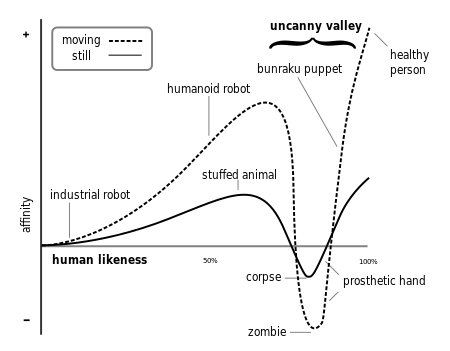
The obsession with quantity and novelty that dogs the reception of games and breeds interesting expectations – games must give us more hours of play than we have to play them, and every one must be new but regular and conventional. Ubisoft went to the extent of reconstructing a proto-indo-european language for this game, but yet it’s perceived to have lacked time and investment. There’s a completely new combat system, a redefined crafting system, an enriched relationship with animals, twice the number of enemy factions (both of which have complex and interrelated fears and desires unlike the paper thin dictatorships of previous games) and there’s twice the number of skills, a meaningful day/night cycle, a whole new base-building mode, completely new environmental assets and textures and a leap in the quality of lighting. And let’s not forget the owl – there are no cars, but you do have a drone… Yet despite there being a bigger jump thematically and mechanically between Far Cry 4 and Primal than between Far Cry 3 and 4, the game is considered ‘uncanny’, too similar but also not quite similar enough.

Picture3.jpg

Despite the franchise finally achieving ludo-narrative consonance, it’s read as oddly dissonant in spatial and graphical terms. Finally, as a caveman, we have an internal logic to justify the use of bows and the necessity of skinning animals and attacking small-scale camps. Finally there are no more bullet-resistant bears or rocket-resistant elephants. Finally we’ve dispensed with paper-thin characters and the most gross and obvious transgressions in terms of racism and sexism. Finally we have a Far Cry that’s more Far Cry than any previous Far Cry and yet we find players alienated, disturbed and underwhelmed. If Primal had come out first, the other games might have looked like botched attempts to extend the mechanics into the present day.

The game is read as too similar in ways which render it uncanny, whereas a close-reading suggests it’s innovative in ways which actually exemplify the series. Why do these elements fail to align? Why is the game read as limited rather than expanded and monotonous rather than refined?

Picture4

I think the answer lies in the online culture of visual comparison – and what I loosely refer to as digital archaeology – in the gaming community. From the Calico Chamaeleon to mock-ups of NX controllers, players in recent years have begun mining images in depth, mapping them with near-obsession for hidden detail and contextual cues. A tree reflected in a screen becomes an indicator of the studio the technology is being developed in, a transparent case exposes hardware to copyright challenges and a team of ‘independent investigators’ as if arms were being hidden inside a retro console. I don’t want to suggest that both analyses are equally delusional, but I would suggest they exhibit the form or shape of a new scopic paranoia. There is increasingly a pressure to analyse and probe and search for similarities and correspondences nearly invisible to the naked eye. This isn’t negative, it’s fascinating. Some of these endeavours are deeply creative too – from the mapping of Bloodborne and its infernal logics to the surveying of Fallout 4’s seabed, players love to uncover patterns, to map the uncharted and to revel in discovering something unique. Without this, games can become monstrously opaque or painfully transparent. When we dig, we often find traces of the making of the game, strange artefacts of production that either beg explanation, or else disappointingly spoil immersion. Sometimes conspiracy is needed to supplement an open world that seems too banal.

Picture5

People like to find patterns, but like the paranoiac delusion, these patterns can be misleading or disturbing and often result in the uncanny. The banal can seem mysterious, or vice versa. Moreover this can be a coping mechanism for the player – we want to dominate the game, expose its secrets. But Illusions and artificial worlds unravel when we dig too deep. In-game archaeology can often face us with the harsh banality and pragmatism of design. We want to map these virtual worlds, but in doing so we erase the unknowns that kept us playing in the first place. We want to master games, but secretly we almost want to fail, to keep it going. We want to be proved right and wrong at the same time. Even before its commercial release, the speed-run time for Dark Souls III – an exemplar of difficulty and gruelling opacity – was reduced to under two hours. When the use of no-clip in Skyrim revealed whole new empires we found them to be disappointingly empty – adjacent kingdoms were in fact deserts, mirages never meant to be reached. It is perhaps no coincidence that Primal’s problems stem from its map. For a Neolithic game, the trouble starts when we go digging in the digital archaeology.

Picture6

Criticism has focused on similarities between the topography of Far Cry 4 and Primal. Their maps, it’s argued, are disappointingly similar, sharing, as Eurogamer points out “the same road and river layouts”.  This is despite the fact that the roads in Primal’s map refer to nothing in this Neolithic environment, and the lay of the land at no point reads the same as the previous title – masked by altered hills and foliage and dominated by glacial sky-lines. In fact the similarities are only obvious after a lot of hard work mapping. It might be easy to dismiss player complaints as an exaggerated sense of entitlement were it not for the vast, questionable, profits generated by Ubisoft, and it might be easy to chastise the developer for the taking shortcuts were these cut-corners more obvious or underhanded, but these anxieties indicate something deeper. There is something peculiar at work when the most coherent and innovative in the series sparks such dissatisfaction.

Picture7

Simply put, this Far Cry is yet more Far Cry, a sprawl of Ubisoft task-lists – but perhaps this is a step too far for a AAA standard-bearer of open-world gaming. Character has been stripped down to systems and caricature, crafting has become ubiquitous, and even the map itself declares the priority of interchangeability and modularity – a world borrowed from Far Cry 4. It’s claimed that Primal cheats us, but perhaps the problem is that it’s too honest – it’s a to-do list without disguise, it’s a hunting sim without pretensions. In digging, players want to find something magical, but end up dispelling the magic, and Primal wears its prehistory on its sleeve. Critics’ problems with Primal are perhaps the realisation of problems they’ve always had with Ubisoft, and the ‘Far Creed’ games. Outrage at the similarity of Far Cry 4 and Primal belies wider anxieties about being sold the same AAA games every year.

Picture8

Moreover, Primal does something with this. It’s the newest Far Cry, but it gleefully predates all the others. In the game’s opening we see a calendar running backwards, and yet the game surprises us by revealing its foundations are older than we thought. It subverts expectations to the point of self-awareness. If Far Cry 3 had its player turn from tourist to assassin in the blink of an eye, in Primal we’re at the bottom of the food chain. We’re not a super-powered gunslinger, we’re afraid of the dark and our weapons break. When we craft something from a rock and a stick, it looks like a rock on a stick. As a chaos engine to play in, it makes us its play thing as we survive a bear and jaguar only to be killed by a mean elk. If we turn off the subtitles we can’t understand a word of anything in the game, but funnily enough we’ve heard this prehistoric story before. Like a satire of the monomyth, we climb up further into the cold, picking up ever bigger rocks, in order to kill a chieftain who’s already dying. This world, like its siblings, is a task master, the same but different.

Picture9

Primal makes the familiar strange, and the strange familiar. Like an existentialist novel, the player finds that everything is just a ‘thing’ – blank, ineffable, monstrous and mute. Assets are just pixels, honey badgers are prehistoric ad fire burns without discrimination. If this were Sartre’s book La Nausea, we might see a jungle gym running at us through the woods before realising it was just a mammoth – or perhaps more tellingly a jeep driving us down which turns out, in fact, to be a woolly rhino doing the same. In an absurd world, significance is what we make it.

This is a game, like its many peers, about nauseous repetition, but it retains enough honest indifference to create a world that’s coherent. Both new and old, perhaps conceptually the first and last open-world, this is a self-aware space that’s oddly fulfilling to inhabit.

Merlin Seller

Dear Player: Gender and Love in ‘Life is Strange’ and ‘Firewatch’

Standard

What if we had games where women couldn’t be visually objectified, or ones which encouraged players not to dominate their environment but instead put empathy into practice? Well the good news is we have some, a variety in fact. I could talk here about Journey or Undertale, both of which adopt androgynous main characters to allow as many players as possible relate to their protagonists, and both involve key mechanics which promote co-operation and communication over competition and paper-thin stereotypes.

I’ve been thinking a lot about what it would mean to handle gender well in games. A lot of valid ink has been spilt over deconstructing how games perform gender poorly, but here I want to discuss positive and critical ways to handle gender and build to an analysis of how two games in particular contribute insights into how we might better think about player entitlement and responsibility – in a word, how to play with respect.

But first let’s consider this question – if we have an understanding of how gender is often done wrong, how is it done well? There are many answers and avenues: Bethesda games offer opportunities to determine the way you express and play gender – even making wry satire of conservative atompunk America in fallout; queer games like LIM have you play as non-binary genders where expression is not limited to two options; Nina Freeman’s games present heartfelt personal experiences in engrossing and often humorous vignettes; while Dragon Age tackles issues of race and gender inequality head on through varied representation and critical dialogue.

2

A game doing gender ‘well’ might eliminate gender difference, or leave as much as possible to player choice, or represent all genders as equally complex and well-rounded, or could make informed comments on – or representations of – diversity. All are sound and interesting strategies for all game design, whether or not gender is a central thematic issue in the game.

Recently there has been a spate of incredibly rich narrative games. While major early indi games like Braid and Dear Esther were masterpieces, they often used an absent woman to motivate a male protagonist, and you get this trope a lot, sometimes called fridging – a lost lover or daughter being important only insofar as they offer an object for the man to dwell on in often self-absorbed melancholy. This style is already being commented on in other games such as Child of Light in which you play a dead princess fighting to free the kingdom and cure your father’s depression. More generally the queer games movement is generating twine games that weave together huge varieties of motivations and identities in ways which avoid labels and conservative conventions. Game spaces can do unique things with narratives and this is being increasingly mobilised to question gender stereotypes – subverting or inverting gender tropes, modes of intimate interaction (consider Robert Lang’s Rinse and Repeat), and even ideas about flow and mastery in games.

3

To clarify terms, here are the definitions I’ll be using:

  • Flow is the ambivalent outcome of both gambling and meditation. It’s the condition of losing our sense of separate identity, being in-synch with the game/world, dissolving into it that can both be a radical critique of the self, but also inhibit critical thought (going with the flow doesn’t always challenge the status-quo)
  • Mastery is the expectation that over time the player will come to be fully fluent with the game, both the idea of ‘beating’ the game and the idea that a game is a challenge in the first instance. Progress, levelling-up, unlocking gear and liberating settlements are all part of this. Flow often works in tandem with it, but it can also involve stepping back form a game in order to manipulate it. However, while mastery can be positive in the way that it fosters skills, educates and confers empowerment to the player, it also set’s problematic precedents of entitlement (we will inherit the earth) and plays on a central opposition between player and environment where everything is the enemy and the player is expected to conquer.

The two games I want to focus on as embodying new kinds of direction in mainstream games, use aspects of all these challenges to established game design, but in very different ways. Firewatch and Life Is Strange both subvert traditional femininities and masculinities, propose new forms of affective intimacy, and also question the position of the player and their relationship to the game in terms of flow and mastery.

4

Life is Strange is an episodic time-travel game from Dontnod Entertainment, but it’s a break from their previous title’s use of memory and ‘time-travel’ as a puzzle mechanic. Instead it focuses on the relevance of time to relationships, and its capacity to act as both a metaphor and a means of making an argument about mastery.

At first glance the game reads as a magic realist teen drama influenced by Donny Darko. Its ubiquitous teen-speak, while at times unsuccessful, is an attempt to make the game and player feel immersed in a time, a world and a nostalgia and to allow the young women at the centre of the story to represent themselves through their own cultural ephemera. While this can come across as kitsch, the game revels in it self-consciously as soon as one of the characters says ‘go fuck your selfie’, and this adoption of kitsch adds to its queer pop-appropriating identity, centring as it does around the lives of queer women.

5

The core plot follows your character’s attempt to save her friends and enemies with the fore-knowledge of an impending apocalypse. Fortunately, you have two core skills, and neither of them is marksmanship, super-strength or a bikini (none of which would offer much defence against the tornado you face). No, you’re a photographer who can rewind time – and you are strong and you are flawed and you are sincere and you are human and your world is fascinating.

6

Your character works with the equally well-rounded Cloe to both try and understand what’s happening, and save Cloe’s missing girlfriend. Your relationship with Cloe depends on how you play, and can be more, or less, platonic – but it is always intimate and complex. One of the things this game does better than any other game I’ve come across (speaking as someone who’s bisexual), is bi/pansexuality. At no point is your relationship definitively prescribed or categorised. You care for each other and in rich variety of ways love each other. It side-steps cliché and makes queer sexuality both touching and incidental. It performs love without labels, and I think it’s beautiful. There are choices, but no tick-boxes, and so it reflects deeply on the idea that identity is performative, in the way that Judith Butler would argue gender is performative: something we do and become through doing rather than something we’re necessarily born to be.

7

Intimacy in this game also broaches other subjects such as empathy and mental health. This is a very tactile intimacy, we reach out in-game to rewind time, which blurs and crumples like analogue film, we form attachments through recognising other people’s experiences, and picking through fragile ephemera. One character we see suffering physical pain we relieve by rewinding time – we see another human, and alter our plans to intersect with their happiness. In a crucial encounter you discover fluoxetine at Cloe’s house, which is left for us as part of the world to naturally encounter – no labels or stigma come with it, but for those with personal experience of clinical depression, this can be richly signifying object: it’s an anti-depressant. In a key moment we grapple with a deeply affective encounter with suicide which can result in the loss of a major character in the first act: this risk taking elevates our attachment and involvement in this game to keen emotional highs and lows.

8

Moreover, we can get to intimately understand ourselves. We can take time out to rest – to sit on a bench while our character reflects on recent events and the soundtrack takes over. While the camera plays a montage of shots of us, we are given the time to dwell on the moral weight of our actions and the complexities of our relationships. The game’s central mechanic could even be read as a metaphor for anxiety – we constantly re-wind time looking for a perfect solution, but we are confronted with the fact that there isn’t one

Here the game plays intricately with flow and mastery in various ways. Firstly, it’s coherent world and photographic aesthetic sucks us in and thematically ties its personal and philosophical concerns together – we can take time to meditate, but we can also reflect on and interrogate our actions and responsibilities deeply. This is a world where we feel deeply present.

9

Secondly both offers flow as reward, and also points to the illusion of flow and mastery. In various sections we can overcome obstacles through time travel – we repeat a sequence of events again and again, obsessing over them, and in the end we play through them in quick succession to achieve our end. We have, in Cloe’s words, Superpowers – but they don’t feel like them, especially when they’re taken away from us at moments to have us grapple with the uncertainty of our world. By showing the effort we put into flow, it shows us nothing is easy, and raises interesting opportunities for empathy with people who live with anxiety.

Thirdly, responsibility is opposed to mastery. We are both forced to repeat and disrupt flow-engaging experiences, but even with all the information we have, there are no perfect solutions. If in Walking Dead we might lose a quicktime event and feel cheated, here we know all the options, and have to commit ethically grey actions all the same. Moreover, unlike narrative games like the Walking Dead which try and hide their linearity, LiS foregrounds it and asks us to question what guilt might be in a pre-determined world. The player feels deeply responsible for the world, and has to make huge sacrifices. Moreover, Ego is displaced in this game, and domination is replaced with empathy. Throughout the game we are even presented with the realisation that we cannot win, but we are also given the option to damn the world that is pitted against us.

10

Firewatch also critiques gender, and questions our understanding of flow and mastery, but in very different ways. Firewatch, was developed by Campo Santo, a studio formed from developers working at Telltale, and it inherits a sophistication in the way it plays with dialogue and vulnerability from The Walking Dead. This is also a game about reflection and intimacy, but at first glance it could hardly be more different. This is a first-person narrative game set in an isolated wilderness. We see almost no-one, and our sense of being alone is as palpable as our fully modelled body. The central plot is also fascinating for the way that it actually dwells on the banal instead of the magic realist – your superpowers aren’t time-travel, they’re a compass – but this is both as metaphorically rich and interestingly disempowering and empowering as the core elements of Life is Strange.

11

Firewatch opens with dialogue choices where we learn that we are running away from our problems, our wife has early-onset dementia and we’re struggling to cope – we decide to have time to ourselves as a scout watching for fires, while grappling with the selfishness and intractability of the choices we’ve made. Throughout the game we deal with a conspiracy that has a human tragedy at its heart that reflects our own inner demons, and the main mechanics involve navigation of an almost-empty forest using an in-world map, and communication through a walky-talky with the other main character.

12

Even at its opening, the game makes it clear that it wants to question masculinity and deal with gender intelligently. Its preface is brutally honest, as well as sweet and well-rounded. It pokes fun at hyper-masculinity where we choose how our wife draws our portrait – either as a faux weight-lifter or a male lingerie model. Not only does it subvert gender roles, but it’s also one of the few mainstream games to really use full male nudity for more than a crude joke. Going forwards, the ideas of sensitivity and vulnerability are central to the way this game frames masculinity.

The standard of voice-acting and dialogue in this game is exceptional, and our distant companion, Delilah, is a complex, confident and witty person independent of the player. Our relationship can again be more or less platonic, and the device of the wedding ring on our finger (only visible when interacting with certain objects) reflects our character’s inner state after a certain number of days it no longer appears on our finger. What’s especially interesting about this relationship though, is its asymmetry.

14

Sight plays a key role here: we never see Delilah, and there is never an opportunity for the player to physically objectify her. Reciprocally, Delilah cannot always see us, and never up close, and a lot of humour is generated from the discrepancy between what we see and what we say. Our relationship is through sound, and also touch – we use our left hand to depress the trigger and cycle dialogue options as if we were physically holding the walkie-talkie. Sound and touch at the expense of sight – we only see distant shadows and masked people, and even these infrequently. We might even say, in the Foucaultian tradition, that the traditionally masculine sense of sight is downplayed in favour of senses often associated with the feminine (Julia Kristeva, Louise Bourgeois and others would be interesting to consider here).

This also makes for a two-way means of interacting with the world very different to traditional dialogue trees in narrative games. We share information by describing things, while worrying that an external threat is observing us – dialogue happens in the world and in real-time as we walk. What we can see feeds in to what we say to a person in the same time as us, but a different place, and vice versa, moments of insecurity result from what Delilah can see and we cannot as well as moments of hilarity. Our relationship is a complex exchange, and a complex balance where no party has full control or understanding of the other, and the imperfect translation of experience is a key theme.

13

Empathy in this game is fostered by trying to understand that people see the world differently, whether that be the conspiracy we might fall into, or the forever distant campers who read us as an enemy without ever knowing us. We watch the sunset while talking to Delilah – we watch the same sun set – but do we share the sunset?

In this game mastery is replaced with vulnerability, isolation and negotiation, while the flow we get from nature and narrative are disrupted by the interjections of distant characters, and twists and turns in the plot. This game stages escapism and flow as important but partial, and in the end we must return to confront the world we tried to leave behind. We learn, and reflect, and grow a little but there will always be smoke in this forest, parts we cannot see. What Firewatch suggests is a sensitivity to difference as well as humility, and an understanding that communication is fraught with obstacles and things unsaid.

15

As a final thought to end on, we might compare this pair with Braid and Dear Esther. Where Braid’s rewind mechanic was a blunt metaphor for loss and regret over a failed relationship, LiS offers rewind as a way of foregrounding complex relationships and mental states unfolding. Where Dear Esther had the male protagonist essentially talking to themselves about a car accident while wandering along a track, Firewatch doesn’t take its melancholy too seriously and involves an actual exchange which avoids reducing one character to the reading of the other. These are definitely games I would be happy to say do gender ‘well’.

Merlin Seller

Lecturer

Games Art and Design

Norwich University of the Arts

Dear Player: SOMA and the Body

Standard

Videogames can offer us a vast range of sensory experiences, but we tend to talk about them in terms of text: narrative and code, signifiers and rule sets. What does it mean to see or touch a virtual world? Focusing on SOMA, and drawing on Deleuze and Haraway, I want to explore how this game configures bodies and sensation.

What game has time-travel, A.I., zombie-things, and sets it all under the sea after the apocalypse (plus you’re a robot)? Surprisingly not a Saint’s Row but rather one of the most immersive, elegant and thought-provoking games of the year: SOMA (2015), Frictional Games’ successor to the most significant horror title of the last decade – Amnesia (2010). It asks us what it means to be human, but also what it means to be alive, what it means to feel, and what it means to play a game with a machine.

In SOMA, the player begins life in the present day. We play as Simon, and we’ve recently lost someone we loved to a catastrophic collision of bodies and machinery, in this case a car crash. We’re off to get a brain scan to test for head trauma. We sit back into a machine in the present, but when the headset comes off, we find ourselves in a distant future in a rusting laboratory under the sea.

What is slowly revealed to the player is the knowledge that we, as we now find ourselves, are just a copy of that brain scan from long ago which has been downloaded into a robot body by the lab we find ourselves in. In this new world everything above sea level has been destroyed, with the last of humanity here under-water… and far from having a picnic.

1

The Artificial intelligence running and protecting the base has started to copy and convert humans and anything it can get its hands on into human-like cyborgs in a misguided effort to preserve humanity into the future. The AI seems pretty keen on the idea that shambling metal zombies are better than nothing. Our task, becomes one of further epistemic entanglement as we avoid this mad AI while we attempt to launch a digital back-up of the last humans into space. Those are the options for the future of humanity– software copies of people in a simulated paradise on a satellite or semi-sentient cyborgs in an undersea hell, and either way a collision of bodies and machines. There are a lot of literal and conceptual grey areas in SOMA’s murky mise-en-scene. This is a game that plays with paradoxes and thought experiments at the same time as it keeps its player highly tense, physically and emotionally stressed. While its plot sounds confusing, true disorientation comes in the form of screams distorted by water and vision blurred by faulty sensors.

2


Bodies and Sensation

As you can see, this is a dark game, full of claustrophobic and visually dense environments but not everything is as it first seems. The game is actually very open and minimal. The game’s very tactile surfaces are also submerged in thick mediating filters, shaders and other lighting effects, such that our vision swims, even when we stand on dry metal flooring. If we stand still and look at a monster its textures are dull and low-fidelity, but by keeping us in constant motion, and fomenting a grainy atmosphere with visual FX, we experience the world as a continuous and immersive nightmare. Our first person perspective locks us into our body, even when mirrors show us that our suit is empty, and we become very attached to our virtual limbs when we have to mimic their movement to open a door handle by circling our mouse or analogue stick. This is a game which is deeply kinaesthetically involving, even when we can’t see our character’s hands – we progress by pushing, pulling, turning and lifting.

3

Everything feels materially connected in this game – the AI’s metal tentacles suck at sea-life and machinery alike, trying to build inscrutable half-persons from whatever it encounters. As we wander from ruin to ruin our character is equally at home under the water and in pockets of air, but even though we are not restrained under the sea, our intense loneliness makes us fear the vast undifferentiated darkness. If in Bioshock, escape was our motivation and the cold ocean our prison walls, here we know that ‘escape’ is not straight-forward, and possibly ineffable to us. We must rescue a small matrix in a bottle, simulated souls, for we have no-where else worth going and nothing else worth doing.

Humanity is dead, and the misguided AI attempting to re-create it has tendrils extending further than the eye can see. In a beautiful aesthetic, merging the organic and geometric, the AI makes cyborg fusions of metal, human and fish using a dark fluid as ink black as the sea. Even our avatar itself, is the product of this AI, a humanoid suit with a booted up memory of Simon running it. We draw sustenance from the AI by plunging our arm into mechanical orifices in the wall, causing our vision to clear, but also projecting black veins across the frame of the screen. Everything in the world of SOMA lies on a continuum – no good no evil, no me no you. The horror of SOMA is the thick soup of sensation we struggle through, our identity unravelling, the walls bleeding and the barely living plugged into power outlets.

4.jpg

Mechanically, if we look at something horrifying, our interface starts to fall apart, the screen tears and after-images flare – the only way to avoid the shambling monsters is to look away and pray they don’t bump into you. As an incentive borrowed from Amnesia (2010) and Call of Cthulhu (2005) this powerfully effects the player, breeding a fear of the unknown which is hard to overcome. Anecdotally, players feel terrified until they die and the game resets – only then do they know what the anticipated shock feels like.

But in SOMA this mechanic also begs further questions – the AI can’t see you unless you can see it, and as the monstrous network is deeply connected to you, it implies that your ‘adversary’ actually sees through your eyes. Your eyes are cameras in a network that might betray you. Looking around in the first person therefore does two things it gives information to us and to the fictional AI, we are our own enemy, alienated from ourselves. This also acts as metaphor for the game itself – a computer is indeed spying on us at every moment, constantly noting what we’re looking at as well as often scripting our movements.

Moreover, in the game our perceptual experiences both make us feel in a deeply human way, and yet declare our inhumanity. Encounters violently visually affects us in an alien way – when we see something terrifying, our screen begins to distort and glitch. What happens here is interestingly double: narratively our mechanical body is experiencing damage to its sensors, but phenomenally, at the level the player feels as someone sat in front of a screen, these pixels stress and terrify us into fearing for our own body. It violently disorients us, it tears apart the image that constitutes our sole window onto this world, and it conveys pain at the same time as it casts doubt on who or what is feeling it – a digital memory, a robotic suit, an avatar, ourselves or all the above?

5

More than just a thematic reflection on multiple identity, we can also be confronted with sensory paradoxes, such that we can feel on multiple levels even within the digital space. In a world of twisted cyborgs and digital ghosts, SOMA suggests that our interface with the game is far from a straightforward division between human and machine, but a complex entanglement of the two.


Bodies and Ethics

For me, SOMA at its core is concerned with the somatic, with bodies – and what it has to tell us about the ethics of consent and guilt is intimately related to its protagonist’s existential crises. Its world is composed of a myriad of kinds of consciousness, kinds of person, animal and machine – from mindless drones to articulate cyborgs – and it faces the player with a series of mind-churning choices concerning their fate. From the beginning of the play experience, all death is at the considered discretion of the player. Moreover, not only is killing progressively more and more optional, but killing takes place in scenarios where the consent of the subject is often a key factor. Ethics are deeply implicated in the bodies we interact with.

You need electrical power, but if a robot thinks it’s human, do you have the right to un-plug it to use the socket? In this world even broken machines claim to feel phantom limbs. Players are usually heroes in games, with unquestionable motives, but in SOMA, as a brain-scan in a mechanical suit, what gives the player priority to live over the other rusted and amorphous bodies around you?

6

More often than not, those subjects and objects around you are in pain, and wish they didn’t exist. When the last living human asks you to kill her, many players refuse, and many more grant her final wish, when another party asks you to kill the mad AI at the heart of SOMA many commit to killing off what amounts to the last sentient life-form on the planet, others, myself included, refuse. The game forces no particular answer and draws no consequence from these acts, the implications are all in the mind of the player, and the implications are many:

The way we perceive time, the necessity of continuity in identity, the relative value of information and flesh, and indeed the value of existence in suffering are all openly questioned by this game on visual, tactile, narrative and mechanical levels.

Your accomplice, your partner and narrator in the game, is a brain scan running on a portable computer in your pocket. Every time you turn her off, she ceases to exist until you turn her back on. She remembers past conversations, but not the intervening time, she muses on what time means to her, a collage of disparate moments with no sense of the movement between them. And what do we think of her plan to save everyone using brain scans and simulation? What do we feel about the prospects of this salvation when we learn that many people have killed themselves trying to keep their own identities continuous outside and inside the virtual Ark? Isn’t it tempting to kill yourself right at the moment you are copied in order to jump straight into virtual paradise, and avoid any troublesome dopplegangers? Maybe it would just feel like going to sleep and waking up in a different place? Or maybe continuity is a lie, and every time we re-load the game, we become a different Simon.

At a heart-wrenching moment we do indeed copy ourselves into a new robotic suit, one that contains someone else’s dead body, but what really punches us in the gut is the voice from the other room – our voice: “what happened? It didn’t work, I’m still here!” Our point of view has been switched to the new body, but our old shell is still alive, and haunts us. In order to get a future copy of ourselves into heaven, we must leave this older copy behind in purgatory.

7

At the end of the game, we load another copy of ourselves onto the Ark, the satellite, and send it into space but our perspective does not switch to the new copy, instead we are left behind, all alone. The magic trick of montage fails us. The game offers us as deep affective sense of continuity by giving us a continuous first-person camera view, but at the last moment, it all unravels and we are left sitting in our chair with the controls in front of ourselves – both in reality and in the game. We lost the coin toss – we know that one of us is happy, one of us is in hell and we are alone. We now know what the copy we left behind feels like, and keenly we sense that the only difference between that bundle of polygons, that mechanical suit, is the position of our perspective on one side of the helmet rather than the other.

First person games make strong use of the cinematic longshot – the feeling of immersion that comes from a long continuous scene where we come to identify with the screen. The genius of SOMA, however, is its ability to get us to both hate and empathise with life beyond the frame, to feel that there is more than our own perspective on this world, and that left to its own devices this game might go on living and feeling without us.

On a wider level, I think this game asks us how alone we are in any world – are we one body or many, shedding and replacing cells every day. Are we spread over the traces we leave behind or do we all die alone? Is life suffering, and what suffers? Fun questions like that – it is a game after all.

But more specifically, I think it also asks us what it means to play a game, to feel a game, to feel through a machine and consider the capacity of a machine to feel. The player oscillates between feeling at one with the world and also alien to oneself.

It prompts us to both extend our sense of self and body, and at the same time reflect on our fear that we are nothing on our own.

Merlin Seller

Dear Player: The Beginner’s Guide to Everything

Standard

Play The Beginner’s Guide. Really now. Stop reading and play Beginner’s Guide. That’s all I needed to say.

But for those of you’ve already experienced it, here’s a lot of stuff that I don’t need to say, but (with some regrets) I really want to. What follows is spoiler-tastic, and makes no concessions, to, well, anything – this game is truly one of the greats, a masterpiece, and I want to get to the point: this is a game about almost everything.

The Beginner’s Guide: it’s a game about power, intimacy and privacy; it’s a ‘narrative’ game that unpick’s the basic assumptions of ‘narrative’; it’s a complex dialogue on mental health and the problems of inter-personal understanding; it’s the death of the author; it’s the death of the player; it questions the fabric of gaming while throwing the player into a series of brilliant game concepts in quick succession – each of which deserving of an essay in its own right. Heck, it’s even about love, and hopefully someone’s already written a queer reading of it. Heck, I’m head-over-heels in love with this game, and each of its game sketches (which stand as deserving games in their own right).

To appreciate this, we need to look at the big picture and contend with the artifice of the game’s structure. When I refer to Davey and Coda, unless stated otherwise, I am referring to them as characters as they appear to the player of the game. The Guide poses as a curated and narrated series of games nominally made by another party in chronological order. ‘Coda’ is a fiction, and we can assume ‘he’ could stand for a variety of things – Coda is the maker of The Beginner’s Guide, Coda is a failed relationship, Coda is an estranged friend, Coda is a rejection of end points, of ‘coda’s per se. Coda is a construct which demonstrates the inaccessibility of the intention/artist/author behind an artwork/text/game. As ‘Dave’ our narrator tries to deduce more about Coda through his games, the more we realise that the maker cannot be ‘known’, and that instead we learn more about what Dave thinks of himself than what he can ‘discover’ about someone else.

Contrary to Dave’s first thesis, the player finds out that games are rich, alien things, that give no access to the mind of their creator, that give no meaning beyond the one we write upon them. ‘Dave’, initially a surrogate/analogue for the player’s pov, struggles with the idea that games can be unplayable, that games don’t need endings, that games don’t ‘need’, and can in essence never be known. He mods games to give narrative structure to that which actively resists it. At first he argues we should take the games for what they are, not what they might have been or what the author might have wanted, but in his anxiety Dave projects, infers, speculates and alters. His reading of ‘coda’s games actively changes them. He adds endings and reveals what is hidden.

Let’s think about this. He adds endings to games (e.g. the cleaning game, a zen-like meditation his character doesn’t seem to appreciate), but he also hates games with endings (he opens doors left right and centre). He wants, if we are to try and resolve this contradiction, to ‘progress’ in games which deny the player that through either endless deferral or premature curtailment and frustrating obstacles. The cost of his attempts to ‘read’ another person through their work is his complete alienation from this person. He falls in love with his idea of someone, which of course is more than a little ironic. Berating Coda for trying to have a conversation with himself, he in turn performs the same manoeuvre, trying and failing to talk to a person he doesn’t understand and only causing pain as a result. The ‘real’ Dave invents coda and struggles to talk to his invention ‘Talking to oneself’ is also seemingly a central aspect of games themselves – our relationship with the automaton – in playing single-player games we have a conversation in which we are the only party aware of it. We talk ‘with’ ourselves, as in the phone box at the end of prison levels. ‘Dave’s struggle is the struggle of both the game designer trying to understand his creation, and the player trying to dialogue with the game world.

But it would be crude to say this game is a guide to living with oneself, that ‘Dave’ just has some issues which he projects, and that by the end there is some catharsis where he learns to love himself or some other trite conclusion. By the end Dave still cannot imagine self-worth without someone to talk to – its “inconceivable” to him. He may crudely reduce meaningful human contact to praise on the one hand, but he also seems to want meaningful contact with ‘Coda’ more than anything – he sees him as a deeply rich human being, and his tragedy is that his love is unreciprocated. There is some truth to Dave’s argument: you can’t cure loneliness by talking to yourself. In playing a game, however, we neither really talk to the game’s maker (who is absent/ineffable) or simply ourselves. We are talking to a game. We are talking to a ‘thing’. And that’s okay. What Dave doesn’t understand is that games are not a means to an end (health, meaning, validation), but a process worth itself. Every impression we make leaves an impression on ourselves. In both making and playing games we are ‘doing’ something, performatively – exploring, reflecting, learning and growing.

Dave cannot ‘know’ Coda, but he can play their games. We cannot know ‘Dave’, who is not the ‘real’ dave but a character who leaves us without so much as a complete sentence for a goodbye. We all project, and empathy is fucking problematic, but games give us great environments in which to pause and think. In a game we can see doors we cannot open, but also unknown unknowns. We can see ourselves from a distance, and also respect that we are limited in what we can know, what we can do. Games are both part of us and something else, like everything we have a relationship to. We work with them and they become part of our dreams and conversations. Like an infinite maze, or a meditative labyrinth, games are alien – their rich ‘otherness’ is both inherently meaningless, but also potentially infinitely meaning-ful. They are a moment of shared being, nothing more and nothing less.

To paraphrase a ‘cheesy’ observation from The Beginner’s Guide: Games are like souls, you take care of them and they take care of you, but you don’t own them or know them any more than they do you. All that I’ve said here is a text for a game which is very much its own explanation and explanandum – my reading is likely as woeful a misreading as Davey’s. The game doesn’t ‘need’ what I’ve written. Play the game again – stop reading and play.

Play The Beginner’s Guide. Really now. Stop reading and play Beginner’s Guide. That’s all I needed to say.


But for those of you’ve already experienced it, here’s a lot of stuff that I don’t need to say, but really want to. What follows is spoiler-tastic, and makes no concessions, to, well, anything – this game is truly one of the greats, a masterpiece, and I want to get to the point: this is a game about almost everything.

The Beginner’s Guide: it’s a game about power, intimacy and privacy; it’s a ‘narrative’ game that unpick’s the basic assumptions of ‘narrative’; it’s a complex dialogue on mental health and the problems of inter-personal understanding; it’s the death of the author; it’s the death of the player; it questions the fabric of gaming while throwing the player into a series of brilliant game concepts in quick succession – each of which deserving of an essay in its own right. Heck, it’s even about love, and hopefully someone’s already written a queer reading of it. Heck, I’m head-over-heels in love with this game, and each of its game sketches (which stand as deserving games in their own right).

To appreciate this, we need to look at the big picture and contend with the artifice of the game’s structure. When I refer to Davey and Coda, unless stated otherwise, I am referring to them as characters as they appear to the player of the game. The Guide poses as a curated and narrated series of games nominally made by another party in chronological order. ‘Coda’ is a fiction, and we can assume ‘he’ could stand for a variety of things – Coda is the maker The Beginner’s Guide, Coda is a failed relationship, Coda is an estranged friend, Coda is a rejection of end points, of ‘coda’s per se. Coda is a construct which demonstrates the inaccessibility of the intention/artist/author behind an artwork/text/game. As ‘Dave’ our narrator tries to deduce more about Coda through his games, the more we realise that the maker cannot be ‘known’, and that instead we learn more about what Dave thinks of himself than what he can ‘discover’ about someone else.

Contrary to Dave’s first thesis, the player finds out that games are rich, alien things, that give no access to the mind of their creator, that give no meaning beyond the one we write upon them. ‘Dave’, initially a surrogate/analogue for the player’s pov, struggles with the idea that games can be unplayable, that games don’t need endings, that games don’t ‘need’, and can in essence never be known. He mods games to give narrative structure to that which actively resists it. At first he argues we should take the games for what they are, not what they might have been or what the author might have wanted, but in his anxiety Dave projects, infers, speculates and alters. His reading of ‘coda’s games actively changes them. He adds endings and reveals what is hidden.

Let’s think about this. He adds endings to games (e.g. the cleaning game, a zen-like meditation his character doesn’t seem to appreciate), but he also hates games with endings (he opens doors left right and centre). He wants, if we are to try and resolve this contradiction, to ‘progress’ in games which deny the player that through either endless deferral or premature curtailment and frustrating obstacles. The cost of his attempts to ‘read’ another person through their work is his complete alienation from this person. He falls in love with his idea of someone, which of course is more than a little ironic. Berating Coda for trying to have a conversation with himself, he in turn performs the same manoeuvre, trying and failing to talk to a person he doesn’t understand and only causing pain as a result. The ‘real’ Dave invents coda and struggles to talk to his invention ‘Talking to oneself’ is also seemingly a central aspect of games themselves – our relationship with the automaton – in playing single-player games we have a conversation in which we are the only party aware of it. We talk ‘with’ ourselves, as in the phone box at the end of prison levels. ‘Dave’s struggle is the struggle of both the game designer trying to understand his creation, and the player trying to dialogue with the game world.

But it would be crude to say this game is a guide to living with oneself, that ‘Dave’ just has some issues which he projects, and that by the end there is some catharsis where he learns to love himself or some other trite conclusion. By the end Dave still cannot imagine self-worth without someone to talk to – its “inconceivable” to him. He may crudely reduce meaningful human contact to praise on the one hand, but he also seems to meaningful contact with ‘Coda’ more than anything – he sees him as a deeply rich human being, and his tragedy is that his love is unreciprocated. There is some truth to Dave’s argument: you can’t cure loneliness by talking to yourself. In playing a game, however, we neither really talk to the game’s maker (who is absent/ineffable) or simply ourselves. We are talking to a game. We are talking to a ‘thing’. And that’s okay. What Dave doesn’t understand is that games are not a means to an end (health, meaning, validation), but a process worth itself. Every impression we make leaves an impression on ourselves. In both making and playing games we are ‘doing’ something, performatively – exploring, reflecting, learning and growing.

Dave cannot ‘know’ Coda, but he can play their games. We cannot know ‘Dave’, who is not the ‘real’ dave but a character who leaves us without so much as a complete sentence for a goodbye. We all project, and empathy is fucking problematic, but games give us great environments in which to pause and think. In a game we can see doors we cannot open, but also unknown unknowns. We can see ourselves from a distance, and also respect that we are limited in what we can know, what we can do. Games are both part of us and something else, like everything we have a relationship to. We work with them and they become part of our dreams and conversations. Like an infinite maze, or a meditative labyrinth, games are alien – their rich ‘otherness’ is both inherently meaningless, but also potentially infinitely meaning-ful. They are a moment of shared being, nothing more and nothing less.

To paraphrase a ‘cheesy’ observation from The Beginner’s Guide: Games are like souls, you take care of them and they take care of you, but you don’t own them or know them any more than they do you. All that I’ve said here is a text for a game which is very much its own explanation and explanandum – my reading is likely as woeful a misreading as Davey’s. The game doesn’t ‘need’ what I’ve written. Play the game again – stop reading and play.

Merlin Seller

DEAR PLAYER: MAD MAX AND THESEUS’ SHIP

Standard

‘A sailing ship?’ Asks disdainful Chumbucket (engineer, age unknown), ‘heretics messing with natural forces is sacrilegious, the Archangel Combustion is the only Way!’ As I watch Pink Eye’s land-ship sail out into the Great Nothing, I wonder if they were the lucky ones. Or whether their death is as certain as the world’s. This is the Dead Barrens of Mad Max – a world recycled, perturbed, lost and found. The player stands at the edge of a game world well aware of its limits. I turn and I jump back into the centrepiece of the game, a bricolage of scrap, pistons and oil all grinding against each other in an effort to become a car called the Magnum Opus. This is a car that wants to make the same journey – beyond the expanse of nothing. Sure it’s a shiny ark, but I’m not entirely sure what I’m trying to save.

The car has technically got more personality than either the protagonist or the damsel-in-distress trope could ever muster, but it provides little stability for the player.  This is an atmospheric game, but it’s also one that lacks ‘character’, ‘originality’, or ‘authenticity’ on multiple levels. Mad Max is a post-modern game in every dimension. It borrows unashamedly from AAA games left right and centre – Arkham, Tomb Raider, Just Cause, Assassins Creed, Uncharted, Burnout, the list goes on. In fact, it’s nearly infinite – everything in this game is recycled, thematically and structurally. Max drives a bundle of scrap. He feeds her and upgrades her, and piece by reclaimed piece the player makes a glorious ride. Max just wants to fill a car-shaped hole in his heart and get the hell out of dodge, but the world they have to survive together makes for an epic odyssey. Mad Max poses interesting questions about both the development ‘of’ games, and development ‘within’ them: What is character development when your car has more personality and raison d’etre than you do? What does it mean to progress in games? What makes a game ‘original’?

Like Shadow of Mordor, this game is a finely tuned amalgam of successful precedents. It stands on the shoulders of many giants, but its lack of originality has led to mixed reviews. Understandably, some see a movie-franchise game like this to be yet more evidence of a risk-averse industry re-treading well-worn ground. Even Martin Robinson’s positive Eurogamer review ends on a note of repetition: “You’ll have played other, better examples of the genre, and you’ve likely been a tourist to the post-apocalypse a few too many times before, yet Avalanche wears the fiction so well it’s hard not to be charmed by this brutal, beautiful open world.”

We live in interesting times – the end of everything is now the beginning of so many stories. But perhaps tellingly, it’s not clear how Mad Max’s world died. Sure there are hints, and a wonderful array of historical artefacts Max has a comically bleak exposition of, but there’s no smoking gun. If anything, it seems to have been a combination of factors – global warming (‘the big wet’), nuclear war (or at least something sufficient to level cities in one or two decades), and inexplicable drought. That’s a biblical litany of plagues right there, but it’s not complete. Indeed one of the most interesting qualities inspired here by the films is the titular ‘madness’. Were people broken by the collapse of the world, or was it madness which brought us to this point? As ‘Fury Road’ asks of itself: “who killed the world?” – was it us? Does it matter? Have we lost guilt with the end of everything else?

Our protagonist suffers from amnesia, but through introspection he only learns how to become a better nomad. His mono-mania is escape, to move on, to never stop. In this he mirrors player aspirations – we upgrade, we progress, we unlock, all for the sake of further progress. We look out at the edge of the gameworld – the endless flat ‘Plains of Silence’ – and we wish to cross it, to drive our character out of the game itself, to become something more. But he never will. This is a game well aware of its limits, as well as its potential limitlessness. It is a game which concerns scarcity, but which offers abundance – it’s oil respawns, it’s scavenged scrap becomes a growing income.

The apocalypse is productive destruction, something old becoming new, and while the world might have to die, but only to weld an infinite number new ‘post’ worlds together. Mad Max is mechanically akin to its thematic ‘origins’ – it is fractured, multiplied, all the disasters and horrors of all the disaster movies and horror games. We have been tourists of the post-apocalypse before, that is true, but we can never step in the same river twice. The Great White is a hybrid world, perhaps even a sattirical take on previous Armageddons – everything that could happen did happen. The world, we could say, is made from successful un-makings – unravelled narratives are the base unit of this open game. It is a mad cacophony, but also a beautiful example of the carnivalesque. It’s a bit like Everybody’s Gone to the Rapture, but some new folk turned up to have a party.

The world is upside-down – seas are deserts, fossil fuels are everywhere, the enemy even seems to come back from the dead. The game is, not unsurprisingly, like a game: both infinite and finite, immersive and unreal. Our missions repeat the same basic rules, but with huge variety. When we help wastlanders we often have to fetch something lost, but only ever to make it something new – a tarp turned sail, a crab-shop sign turned religious icon, fairy-lights turned into mass spectacle. We return and repurpose fragments of the old world in the same manner that our car grows old, sheds its components and acquires new ones.

I am reminded, in the end, of a conundrum, a thought experiment called ‘Theseus Ship’. We’ve all heard various versions of it, and none of us have answers, but as our Max loses everything yet persists, and our car retains its name but changes all its parts, we’re given some questions. Imagine a ship, a famous ship, in this case the one that made the famous Greek Odyssey in search of home, identity and immortality. Now imagine a part breaks and gets replaced, again and again and again. Eventually not a single original part remains – is it still Theseus’ ship? At what point does it become something else? But wait, there’s more. Imagine that simultaneously each broken piece of Theseus’ ship is put back together in shape of the original, with all the original materials, but a new construction? Now which is Theseus’ ship? What the heck happens to the idea of the ‘original’ or ‘authentic’ at the half-way point? Is suppose I have to say the answer is whatever ‘floats your boat’.

Mad Max may lack ‘originality’, but it makes us question what that even means. Every game is staked in repetition, in tradition, in languages made familiar to the player through previous games or preceding tutorials. Mad Max’s car is in a constant state of becoming, just like the game at large – each new component adds at the same time as it overwrites. The wasteland is the accumulation of the mechanical successes of other games, but is also thematically the other ship – the accretion of everything lost in previous apocalypses.

What seems like a loss of agency and identity to some is an epic party to others. The world churns and we’re along for the ride. In life as in-game, there is no original, no persistent identity to things, only sets of shifting contexts. Which ship is Theseus’s? Either one, neither one, what matters if that weird one made from all the broken parts actually floats. Like the Magnum Opus itself, this great work is a game of many circulating parts, and boy does that engine purr.

Merlin Seller

Dear Player: Everybody’s Gone to the Uncanny Valley

Standard

The lush golden haze of Yaughton is quiet, but far from peaceful. Fictional places are weird things, they make space where formerly there was none, but they can feel like they’ve always existed. The never-was is hard to erase. The Archers reside in a county planted between two real counties, a piece of Little England that never existed, but has been ‘around’ for over half a century. The Radio 4 show is emblematic of continuity, preservation, conservatism with a small ‘c’ – characters last, and when an Archer dies, they pass the farm on to the next. No-one just ‘disappears’.

Everybody’s Gone to the Rapture, poses exactly this crisis. What happens when an imagined community ceases to be? What if you got to heaven and it was empty? An engrossing and tantilising Mary Celeste, these fictional Shropshire villages from the makers of Dear Esther are lost in time and space. There former inhabitants are just disembodied voices – motes of light. We see nothing but traces of what was – from blood-soaked tissues to signs of ‘aliens’ attempting to communicate. By the end we see both are one and the same.

Everybody’s Gone to the Rapture is so powerfully rich and multi-facetted that no single text could ever convey the whole experience. I could wax lyrical about the beautiful soundscape, or the brilliant simulation of British weather. The moving human relationships explore loss, acceptance, love and misunderstanding in a way that elegantly reflects and extends the motif of alien contact, and vice versa, and it cannily and subtly balances the variety of human response in exposure to complete alterity. What I want to do here is reflect on what this game can tell us about ‘play’, and what it can mean to inhabit someone else’s world. I’ll be prone to hyperbolic analogies, but if you bear with me, we might explore some of the more interesting paradoxes of simulation, and the joys of losing ourselves in a game.

A first-person experience, an elegantly paced mystery, this game lets the player read and listen to artefacts of the recent past. Conversations, opaque codes, self-reflective radio messages are all left for our roving perspective to engage with or ignore at our leisure. We intrude, always, in the middle of something – from theoretical physics, to doctor’s visits, deaths and transitions. The beautifully realised world copies everything from the dust of its interiors to the waxing and waning sunlight of its mesmerising landscapes with beautiful photographic detail. Like the Vanishing of Ethan Carter, photogrammetry has captured and transposed real-world textures to lend Little England a concreteness which seems all the more hauntingly real for its lack of occupants.

It’s worth noting that photogrammetry doesn’t work nearly as convincingly for animate objects, for moving bodies. While CGI can convincingly replicate objects in movies, it still struggles with the impression of ‘weight’, something which becomes obvious when a body moves. We’ve all witnessed the slow ballet of character animations, the ‘floaty’ quality in everything from Chappie to Killzone, which even besets those which are motion-captured. The Vanishing of Ethan Carter, like Everybody’s Gone to the Rapture, is centred on a search for missing persons in an uninhabited environment, and the design choices of the game-world and its mechanics coincide perfectly with the current limitations of graphics technology.

This may look suspicious, and we may be inclined to take this as a reductive ‘explanation’ of the game –  the idea that these scenic melancholy masterpieces are empty from technical necessity. Every Body HAD to go to the rapture, or else the illusion of reality would be ruined. But this itself is significant. Limits make games, and games have to be aware of their limits to succeed. In EGTTR we find technical limits taking us to interesting philosophical places – its design choices mesh graphics with narrative. La nature mort, still life, is beautiful, and often the focus of intense mimesis, but its unchanging details betray its nature as a fixed image. As a representation increasingly approximates what it represents, we begin to notice more of what’s left out than of the successes achieved. A good caricature can be more successful than something creepily close to the real thing.

The ‘uncanny valley’ is a name for this phenomenon – a trough in positive responses to an increasing tendency towards naturalism. Just before something looks real, it looks super freaky. Ever been scared of a doll, or seen a movie about androids? You’ll know what I’m talking about. When something’s almost right, but not quite, we experience the Uncanny. The realism of games like Ethan Carter and EGTTR is based on a very unreal contrivance – ghost towns, it turns out, are the closest we get to living breathing ones, but there’s something melancholy about this. Still-born, even at the cutting-edge, games fall short of reality. The genius of EGTTR is that it makes a strength of what it lacks

We can lose ourselves in the The Archers because we’ve never been to ‘Borsetshire’. We can’t get close enough to see the imperfections that tell the lie. In disembodied voices we trust. Illusion at its best, is hidden right underneath our noses and the uncanny can be the most affective of tools. In his history of noise, Prof David Hendy shows us how powerful the disembodied voice can be. When radio was being developed as a mass medium, it had the power to persuade its audiences in a way no other had. Both the NSDAP and the BBC made use of the fact that a voice without a body could speak with persuasive immediacy, it could be both public and personal, it could get inside our heads in a way that a physical speaker could not. Almost hyperreal, a radio voice is more convincing because there’s no-one there to convince us but ourselves. It gets close to our own inner monologue, approximates thought. People, even real people, are imperfect, but voices are like the soul after death. In EGTTR we lose ourselves in its community because of, rather than inspite of, the fact that nobody is there. Like with the radio, we let the voices in, but unlike The Archers, we know these are ghosts. We know these people never existed, and their absence is all the more provocative for it.

The game is set in the 80s, but it doesn’t look at historical vanishing communities or existential threats – mining towns drying up, cold war architecture – but instead at Thatcher’s ‘heartland’. This might seem bizarrely conservative, even ironic, given that Little rural England was a myth forged alongside the birth of radio, a self-satisfying imperial fiction with which countless Conservatives have elided our conquests, and stirred fears over immigration. But Everybody’s Gone to the Rapture looks at the myth of Little England, and guts it. In the course of our exploration we learn that the area is being destroyed by an external influence, one that came as light into the observatory, and which threatens to spread through the phone lines as yet more electromagnetic energy. The military’s solution is to isolate it until it disappears, and even one of its main characters call for their own eradication to spare the rest of the world. The toxic myth of plucky Little England deconstructs itself in magic-realist style. It brings together The Archers and The X-Files in an explosion of light. The place that never was fades away, an imagined community destroyed, and the Player sees the melancholy bones it leaves behind.

But this game also asks us questions about ourselves, and about the nature of games. EGTTR uses a deeply unreal and uncanny event to convey one of the most convincing and moving impressions of a community in gaming history. There may be no bodies, but the traces left behind are made all the more ‘real’. Disembodied voices, in a fictional non-place, weave us into a game narrative with a pensive approach to space. We cannot change what has happened, we can move no objects, but this game gives us an immense awareness of time and loss. We feel deeply ‘in world’. As we move, time moves differently. On entering a village, or encountering a ghostly conversation, the sun moves in the sky, accelerating time backwards or forwards to the extent we know as much about ‘when’ we are as we can place Yaughton on a real map. Shadows lengthen and rotate around us, we string together time in loops and bunches. We feel time moving around us, rather than feeling the world move through time. Everything is static, locked in a yester-year, but yet we warp through it, the sun our only witness. As we replay memories and marvel at the concrete detail of an impossible situation, we are confronted with the uncanny.

If everybody’s gone to the rapture, where are you? Many players feel the ‘open’ world of this game gives us a deeper attachment and greater agency in the world, but we touch nothing, and we walk in a circuit. The map is a circle, which, like EGTTR’s peripatetic sun we stumble around, back and forth, but never outwith its orbit. Restricted to a slow pace, this game is open about the fact that it controls us rather than the other way around. No-one ‘inhabits’ the game, the game’s code merely ‘runs’ us, moving around the Player like a river around a stone. We approach this world as if an alien from a different dimension, and is that not what we are? We sit still at our console while the virtual world passes us by. We are no more ‘in’ this world than Yaughton is in England. If I could chance one more analogy, we are not given a message in bottle, but rather are asked to cast ourselves into the sea.

Like the alien ‘pattern’, we lose ourselves in the encounter with this magical game, the player is figured not as a controlling protagonist, but an exploratory bundle of experiences. Like the pattern of alien light, we are aliens playing in a different world, physical humans roaming a virtual space. Much as the ‘pattern’ imprints and inflects the world, causing unintended pain and misunderstanding as it explores its environment, the player learns what it is like to live on an alien world, and thinks deeply on the problems of overcoming difference. To activate a ghostly memory, the player is even asked to move the controller in three dimensions. We spin the controller as a whole until it vibrates in resonance with the pattern of light – we are taken physically out of the game, made aware of the interface, and consider ourselves as part of the flux. We reflect critically on what it means to be part of an imagined community in existential crisis.

In many ways, this is what it is like to play a game. We do not ‘read’ this hypertextual narrative, space and time in the interactive medium treat us to something entirely different, we ‘harmonise’ with narrative, we feel its affect while losing ourselves. Most games might try and immerse us in a story by getting us to live through the eyes of its protagonist, to ‘perform’ the narrative. Everybody’s Gone to the Rapture is powerful because we aren’t there, and we never can be. We feel intensely lifted from our bodies. There and not there, the same but different, playing games can take us to the Uncanny Valley. What Everybody’s Gone to the Rapture offers us is a chance to feel as de-realised as this non-place. We don’t walk through this game, instead the game intersects with us. We are the lens which brings its light in and out of focus as we tilt our controller to squint at that which never was.

Merlin Seller